Here you will find a detailed speed, performance and benchmark test review. Tested was the M.2 NVMe SSD S501Q with 2TB (FX-S501Q-2TB) from the brand fanxiang.
| Technical specifications (manufacturer information) | |
| Product image |
|
| Manufacturer | fanxiang |
| Model number | FX-S501Q-2TB |
| Capacity | 2048 GB (1908 GiB) |
| pSLC cache | >300 GB approx. |
| Read speed | 3500 MB/s |
| Write speed | 2500 MB/s |
| Interface | PCIe 3.0 x4 |
| Connector | M.2 2280 |
| Memory module (NAND) | QLC |
| DRAM cache | No |
| Controller | Maxio MAP1202 |
v0.34a OS: 10.0 build 19045 Drive : 0(NVME) Scsi : 2 Driver : W10 Model : Fanxiang S501Q 2TB Fw : SN15581 HMB : 16384 - 16384 KB (Enabled, 16 M) Size : 1953514 MB [2048.4 GB] LBA Size: 512 AdminCmd: 0x00 0x01 0x02 0x04 0x05 0x06 0x08 0x09 0x0A 0x0C 0x10 0x11 0x14 0x80 0x81 0x82 0x84 0xC1 0xC2 I/O Cmd : 0x00 0x01 0x02 0x04 0x05 0x08 0x09 Firmware id string[0C0] : MKSSD_101000000018563100,Nov 2 2023,13:55:28,MAP1202,KC1UCA4H Project id string[080] : r:/code/Falcon/QLC_Solution15581 Controller : MAP1202 NAND string : PF29Fxx2AxCQK1 NAND MaxPE cycles : 257 NAND Freq : 5251 Channel number : 0 CE number : 132 Total bank : 171 Flash type : (32) Blocks/CE : 58832 Pages/Block : 257 Page size : 160 Planes(?) : 10 Die/CE : 226 Ch0CE0: 0x89,0xd3,0xac,0x32,0xc6,0x0,0x0 - Intel 144L QLC 1024Gb/CE 1024Gb/die Ch1CE0: 0x89,0xd3,0xac,0x32,0xc6,0x0,0x0 - Intel 144L QLC 1024Gb/CE 1024Gb/die Ch2CE0: 0x89,0xd3,0xac,0x32,0xc6,0x0,0x0 - Intel 144L QLC 1024Gb/CE 1024Gb/die Ch3CE0: 0x89,0xd3,0xac,0x32,0xc6,0x0,0x0 - Intel 144L QLC 1024Gb/CE 1024Gb/die Ch4CE0: 0x89,0xd3,0xac,0x32,0xc6,0x0,0x0 - Intel 144L QLC 1024Gb/CE 1024Gb/die Ch5CE0: 0x89,0xd3,0xac,0x32,0xc6,0x0,0x0 - Intel 144L QLC 1024Gb/CE 1024Gb/die Ch6CE0: 0x89,0xd3,0xac,0x32,0xc6,0x0,0x0 - Intel 144L QLC 1024Gb/CE 1024Gb/die Ch7CE0: 0x89,0xd3,0xac,0x32,0xc6,0x0,0x0 - Intel 144L QLC 1024Gb/CE 1024Gb/die Ch0CE1: 0x89,0xd3,0xac,0x32,0xc6,0x0,0x0 - Intel 144L QLC 1024Gb/CE 1024Gb/die Ch1CE1: 0x89,0xd3,0xac,0x32,0xc6,0x0,0x0 - Intel 144L QLC 1024Gb/CE 1024Gb/die Ch2CE1: 0x89,0xd3,0xac,0x32,0xc6,0x0,0x0 - Intel 144L QLC 1024Gb/CE 1024Gb/die Ch3CE1: 0x89,0xd3,0xac,0x32,0xc6,0x0,0x0 - Intel 144L QLC 1024Gb/CE 1024Gb/die Ch4CE1: 0x89,0xd3,0xac,0x32,0xc6,0x0,0x0 - Intel 144L QLC 1024Gb/CE 1024Gb/die Ch5CE1: 0x89,0xd3,0xac,0x32,0xc6,0x0,0x0 - Intel 144L QLC 1024Gb/CE 1024Gb/die Ch6CE1: 0x89,0xd3,0xac,0x32,0xc6,0x0,0x0 - Intel 144L QLC 1024Gb/CE 1024Gb/die Ch7CE1: 0x89,0xd3,0xac,0x32,0xc6,0x0,0x0 - Intel 144L QLC 1024Gb/CE 1024Gb/die Ch0CE2: 0x89,0xd3,0xac,0x32,0xc6,0x0,0x0 - Intel 144L QLC 1024Gb/CE 1024Gb/die Ch1CE2: 0x89,0xd3,0xac,0x32,0xc6,0x0,0x0 - Intel 144L QLC 1024Gb/CE 1024Gb/die Ch2CE2: 0x89,0xd3,0xac,0x32,0xc6,0x0,0x0 - Intel 144L QLC 1024Gb/CE 1024Gb/die Ch3CE2: 0x89,0xd3,0xac,0x32,0xc6,0x0,0x0 - Intel 144L QLC 1024Gb/CE 1024Gb/die Ch4CE2: 0x89,0xd3,0xac,0x32,0xc6,0x0,0x0 - Intel 144L QLC 1024Gb/CE 1024Gb/die Ch5CE2: 0x89,0xd3,0xac,0x32,0xc6,0x0,0x0 - Intel 144L QLC 1024Gb/CE 1024Gb/die Ch6CE2: 0x89,0xd3,0xac,0x32,0xc6,0x0,0x0 - Intel 144L QLC 1024Gb/CE 1024Gb/die Ch7CE2: 0x89,0xd3,0xac,0x32,0xc6,0x0,0x0 - Intel 144L QLC 1024Gb/CE 1024Gb/die Ch0CE3: 0x89,0xd3,0xac,0x32,0xc6,0x0,0x0 - Intel 144L QLC 1024Gb/CE 1024Gb/die Ch3CE3: 0x89,0xd3,0xac,0x32,0xc6,0x0,0x0 - Intel 144L QLC 1024Gb/CE 1024Gb/die Ch4CE3: 0x89,0xd3,0xac,0x32,0xc6,0x0,0x0 - Intel 144L QLC 1024Gb/CE 1024Gb/die Ch5CE3: 0x89,0xd3,0xac,0x32,0xc6,0x0,0x0 - Intel 144L QLC 1024Gb/CE 1024Gb/die Ch6CE3: 0x89,0xd3,0xac,0x32,0xc6,0x0,0x0 - Intel 144L QLC 1024Gb/CE 1024Gb/die Ch7CE3: 0x89,0xd3,0xac,0x32,0xc6,0x0,0x0 - Intel 144L QLC 1024Gb/CE 1024Gb/die Ch0CE4: 0x89,0xd3,0xac,0x32,0xc6,0x0,0x0 - Intel 144L QLC 1024Gb/CE 1024Gb/die Ch1CE4: 0x89,0xd3,0xac,0x32,0xc6,0x0,0x0 - Intel 144L QLC 1024Gb/CE 1024Gb/die Ch2CE4: 0x89,0xd3,0xac,0x32,0xc6,0x0,0x0 - Intel 144L QLC 1024Gb/CE 1024Gb/die Ch3CE4: 0x89,0xd3,0xac,0x32,0xc6,0x0,0x0 - Intel 144L QLC 1024Gb/CE 1024Gb/die Ch4CE4: 0x89,0xd3,0xac,0x32,0xc6,0x0,0x0 - Intel 144L QLC 1024Gb/CE 1024Gb/die Ch5CE4: 0x89,0xd3,0xac,0x32,0xc6,0x0,0x0 - Intel 144L QLC 1024Gb/CE 1024Gb/die Ch6CE4: 0x89,0xd3,0xac,0x32,0xc6,0x0,0x0 - Intel 144L QLC 1024Gb/CE 1024Gb/die Ch7CE4: 0x89,0xd3,0xac,0x32,0xc6,0x0,0x0 - Intel 144L QLC 1024Gb/CE 1024Gb/die Ch0CE5: 0x89,0xd3,0xac,0x32,0xc6,0x0,0x0 - Intel 144L QLC 1024Gb/CE 1024Gb/die Ch1CE5: 0x89,0xd3,0xac,0x32,0xc6,0x0,0x0 - Intel 144L QLC 1024Gb/CE 1024Gb/die Ch2CE5: 0x89,0xd3,0xac,0x32,0xc6,0x0,0x0 - Intel 144L QLC 1024Gb/CE 1024Gb/die Ch3CE5: 0x89,0xd3,0xac,0x32,0xc6,0x0,0x0 - Intel 144L QLC 1024Gb/CE 1024Gb/die Ch4CE5: 0x89,0xd3,0xac,0x32,0xc6,0x0,0x0 - Intel 144L QLC 1024Gb/CE 1024Gb/die Ch5CE5: 0x89,0xd3,0xac,0x32,0xc6,0x0,0x0 - Intel 144L QLC 1024Gb/CE 1024Gb/die Ch6CE5: 0x89,0xd3,0xac,0x32,0xc6,0x0,0x0 - Intel 144L QLC 1024Gb/CE 1024Gb/die Ch7CE5: 0x89,0xd3,0xac,0x32,0xc6,0x0,0x0 - Intel 144L QLC 1024Gb/CE 1024Gb/die Ch0CE6: 0x89,0xd3,0xac,0x32,0xc6,0x0,0x0 - Intel 144L QLC 1024Gb/CE 1024Gb/die Ch1CE6: 0x89,0xd3,0xac,0x32,0xc6,0x0,0x0 - Intel 144L QLC 1024Gb/CE 1024Gb/die Ch2CE6: 0x89,0xd3,0xac,0x32,0xc6,0x0,0x0 - Intel 144L QLC 1024Gb/CE 1024Gb/die Ch3CE6: 0x89,0xd3,0xac,0x32,0xc6,0x0,0x0 - Intel 144L QLC 1024Gb/CE 1024Gb/die Ch4CE6: 0x89,0xd3,0xac,0x32,0xc6,0x0,0x0 - Intel 144L QLC 1024Gb/CE 1024Gb/die Ch5CE6: 0x89,0xd3,0xac,0x32,0xc6,0x0,0x0 - Intel 144L QLC 1024Gb/CE 1024Gb/die Ch6CE6: 0x89,0xd3,0xac,0x32,0xc6,0x0,0x0 - Intel 144L QLC 1024Gb/CE 1024Gb/die Ch7CE6: 0x89,0xd3,0xac,0x32,0xc6,0x0,0x0 - Intel 144L QLC 1024Gb/CE 1024Gb/die Ch0CE7: 0x89,0xd3,0xac,0x32,0xc6,0x0,0x0 - Intel 144L QLC 1024Gb/CE 1024Gb/die Ch1CE7: 0x89,0xd3,0xac,0x32,0xc6,0x0,0x0 - Intel 144L QLC 1024Gb/CE 1024Gb/die Ch2CE7: 0x89,0xd3,0xac,0x32,0xc6,0x0,0x0 - Intel 144L QLC 1024Gb/CE 1024Gb/die Ch3CE7: 0x89,0xd3,0xac,0x32,0xc6,0x0,0x0 - Intel 144L QLC 1024Gb/CE 1024Gb/die Ch4CE7: 0x89,0xd3,0xac,0x32,0xc6,0x0,0x0 - Intel 144L QLC 1024Gb/CE 1024Gb/die Ch5CE7: 0x89,0xd3,0xac,0x32,0xc6,0x0,0x0 - Intel 144L QLC 1024Gb/CE 1024Gb/die Ch6CE7: 0x89,0xd3,0xac,0x32,0xc6,0x0,0x0 - Intel 144L QLC 1024Gb/CE 1024Gb/die Ch7CE7: 0x89,0xd3,0xac,0x32,0xc6,0x0,0x0 - Intel 144L QLC 1024Gb/CE 1024Gb/die
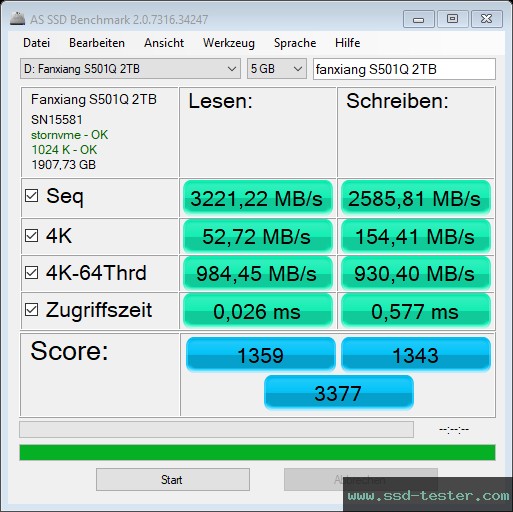
We put the fanxiang NVMe M.2 SSD through a detailed test. You can find the test result / test report here:
The standard test was performed with a 5 GB file. A total score of 3377 points was achieved.
A common everyday scenario is simulated here. Three test folders are created:
The three folders are copied using the Windows copy command (cache remains enabled). The real-world test from 06 February 2024 shows performance during simultaneous write and read operations. The lower the duration, the better.
| AS SSD Copy Benchmark | Transfer rate: | Duration: |
|---|---|---|
| ISO two large files |
2,457.31 MB/s |
0.94 s |
| Program typical program folder with many small files |
1,181.28 MB/s |
5.96 s |
| Game a game folder with small and large files |
2,030.87 MB/s |
3.40 s |
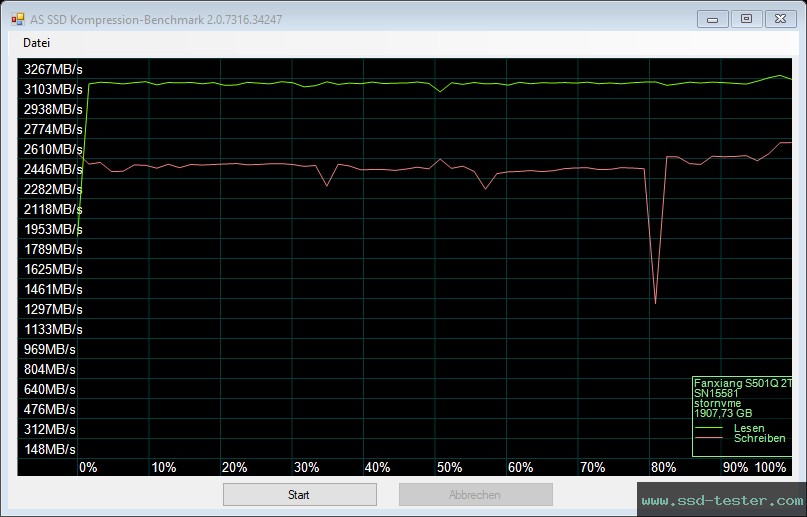
Here, speed is measured depending on how compressible the data is.
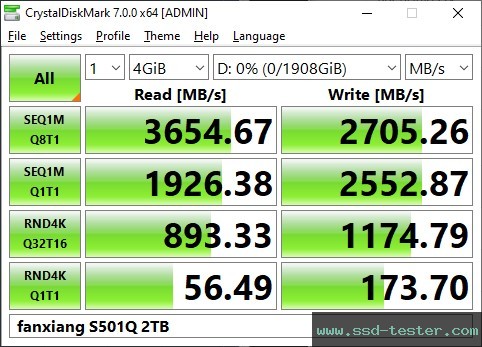
Similar to AS SSD, two sequential and two random performance tests are carried out here and the write and read speed (manufacturer: 3500 MB/s and 2500 MB/s) the fanxiang SSD is determined.

| CDM | Read [MB/s] | Write [MB/s] |
|---|---|---|
| SEQ1M Q8T1 |
3,654.67 |
2,705.26 |
| SEQ1M Q1T1 |
1,926.38 |
2,552.87 |
| RND4K Q32T16 |
893.33 |
1,174.79 |
| RND4K Q1T1 |
56.49 |
173.70 |
| CDM | Read [IOPS] | Write [IOPS] |
|---|---|---|
| SEQ1M Q8T1 |
3,485.40 |
2,579.90 |
| SEQ1M Q1T1 |
1,837.10 |
2,434.60 |
| RND4K Q32T16 |
218,097.00 |
286,814.00 |
| RND4K Q1T1 |
13,791.50 |
42,407.00 |
| CDM | Read [µs] | Write [µs] |
|---|---|---|
| SEQ1M Q8T1 |
2,293.96 |
3,094.31 |
| SEQ1M Q1T1 |
544.12 |
410.43 |
| RND4K Q32T16 |
2,344.86 |
1,783.59 |
| RND4K Q1T1 |
72.38 |
23.45 |
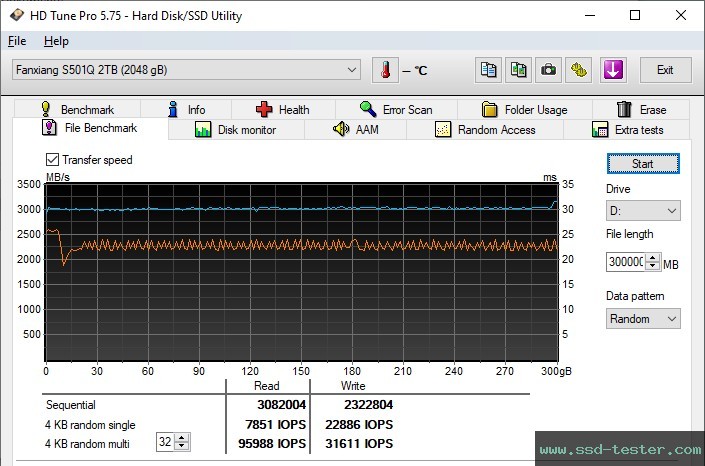
A long-term test was performed to fully utilize the storage. You can see from when a possible cache is full and write performance drops. A test file of 300 GB was written to the medium. The exact cache size could not be determined because the test file did not exhaust (push to the limit) the cache. The test file could at least be read with an average read speed of 3,082 MB/s and written at 2,323 MB/s.
HD Tune writes a 5 GB file to the fanxiang NVMe M.2 SSD. The transfer data of the read speed is displayed graphically. The minimum, maximum and average values are also determined. The measured access time and burst rate are also shown.

Here, a 256 MB file is written to the fanxiang NVMe M.2 SSD multiple times. The I/O block size varies (from 512 bytes to 64 megabytes). The larger the blocks, the faster writing and reading usually becomes.

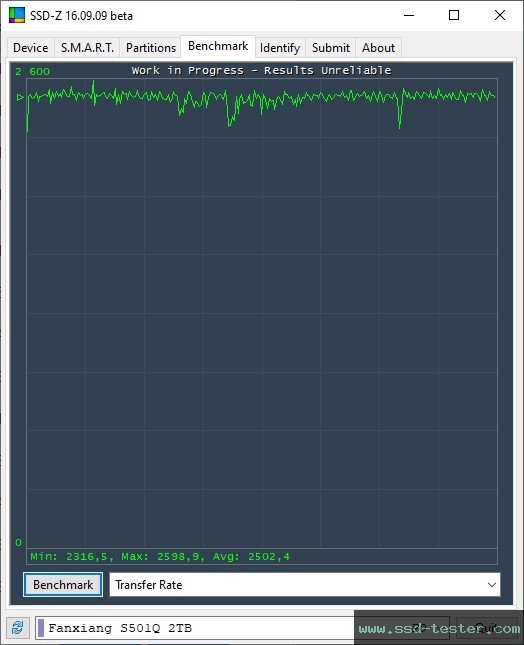
Similar to HD Tune, a 500 MB file is written to the fanxiang NVMe M.2 SSD here. The transfer data is displayed. The more consistent the line, the better. Unfortunately, the tool no longer works correctly from around 4,000 MB/s and no line is displayed (and sometimes incorrect min/max data is shown).

You can find information about the test system at the bottom of the homepage.
As an Amazon Associate I earn from qualifying purchases.